Prop Firm Trading Strategy How to Choose the Best Approach for Consistent Success
Key takeaways
- Mechanical trading system focused on 1-minute futures charts
- Use daily ES & NQ key levels for precise entries
- Strict risk management protects funded accounts
- Scaling through multiple accounts increases payouts
- Avoid trading during unclear market structure
Passing a prop firm challenge requires a disciplined prop firm trading strategy that combines mechanical entries, precise risk management, and smart scaling. The most effective approach uses futures trading on 1-minute charts focusing on daily and intraday ES (E-mini S&P 500) and NQ (E-mini Nasdaq) levels to identify high-probability trade setups. A well-defined system reduces emotional decisions and increases consistency needed for funded account payouts. For traders aiming to pass evaluation phases and grow their prop firm accounts, mastering this strategy is essential. You can access daily ES and NQ levels, bias, and tutorials to support your trading at Sato VIP.
Core Elements of a Prop Firm Trading Strategy
A solid prop firm trading strategy for evaluation and funded trading hinges on several key elements:
- Mechanical Trading System: Use a clear, rule-based system to identify trade entries and exits on the 1-minute futures charts. This eliminates guesswork and aligns trades with high-probability setups.
- Key Levels and Confluence: Mark daily and intraday support/resistance levels on TradingView for ES and NQ futures. Trading around these levels with confirmation from market structure increases win rates.
- Risk Management: Set stop losses and take profits in advance. Limit your risk per trade, usually 1% or less of the account, to protect capital and avoid blowing funded accounts.
- Market Structure Awareness: Avoid trading when market structure is unclear or trending signals contradict. Understanding when not to trade is as important as knowing when to enter.
- Scaling Strategy: Use multiple prop firm accounts with trade copiers to scale your funded trading and increase overall payouts safely.
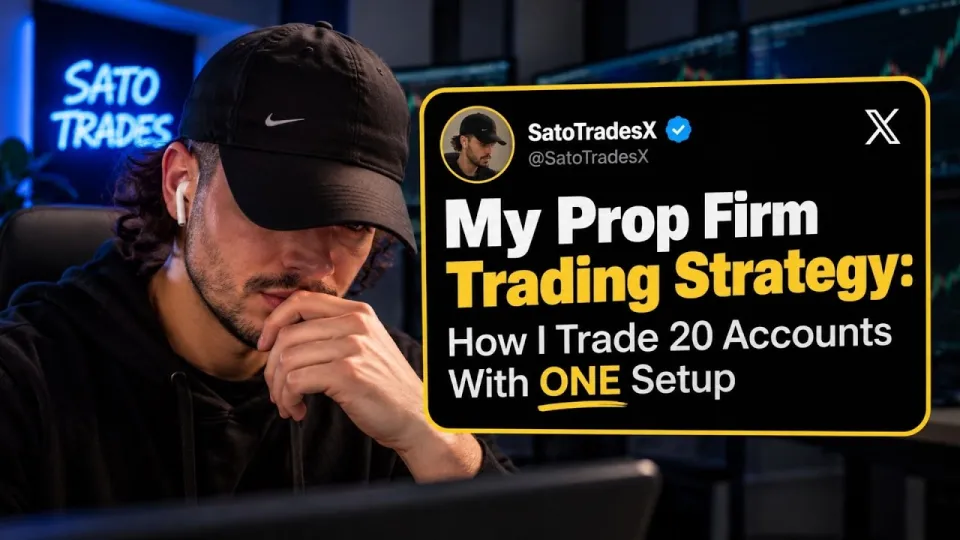
Video: Prop Firm Trading Strategy: How to Pass a Funded Challenge in 2026
How to Trade Daily and Intraday Levels Effectively
The strategy focuses on pre-marked daily ES and NQ levels posted before market open, combined with intraday levels for additional precision. Steps to trade these levels:
- Identify major daily levels from higher timeframes.
- Mark intraday levels where price shows potential reversal or continuation.
- Use limit orders near these levels to enter trades.
- Set stop loss tightly beyond the level to minimize losses.
- Take profit at the next significant support/resistance or a predefined target.
Grouping and hiding levels in TradingView streamlines chart analysis, allowing quick decision-making during active sessions.
Risk Management Rules to Protect Funded Accounts
Risk management is crucial for passing prop firm challenges. Key rules include:
- Risk no more than 1% of your account balance per trade.
- Always set stop loss and take profit orders at the time of entry.
- Use limit orders to control entry price and avoid slippage.
- Maintain daily loss limits to pause trading if exceeded.
- Keep a trading journal to track performance and adjust risk accordingly.
Following these rules prevents large drawdowns and helps maintain the funded status.
Trading Psychology and Market Structure
Emotional control and understanding market structure are vital:
- Trade only when the market confirms your setup via clear structure.
- Avoid chasing trades during volatile or sideways markets.
- Accept losses as part of the process without revenge trading.
- Focus on consistency over big wins.
These psychological aspects improve decision-making and long-term success.
Scaling Prop Firm Trading with Multiple Accounts
Scaling involves managing several prop firm accounts simultaneously:
- Use platforms like Tradovate combined with trade copiers to replicate trades across accounts.
- Diversify risk and increase total capital under management.
- Monitor each account separately to ensure compliance with prop firm rules.
This approach amplifies payouts while maintaining disciplined risk management.
Common Questions and Challenges in Prop Firm Trading
Many traders struggle with level marking, risk sizing, and trading psychology. Implementing a mechanical system and sticking to rules solves these issues. Frequent questions include how to set levels efficiently, when to avoid trading, and how to balance multiple accounts.
Useful Links
- Daily ES & NQ Levels, Bias, Tutorials: https://satotrades.com/vip
- Best Futures Prop Firms Guide: https://satotrades.com/guides/best-futures-prop-firms
- Free Discord Community: https://discord.gg/Yt5PuQjXRp
- Trade Copier Used on Prop Accounts: https://portal.tradecopia.com/signup?via=SATO
Итог
A successful prop firm trading strategy combines a mechanical approach on the 1-minute ES and NQ futures charts with strict risk management and market structure awareness. Scaling through multiple accounts further boosts potential payouts. The method detailed by Sato Trades offers a clear, professional framework to pass funded challenges and trade prop firms consistently. To start improving your results, consider joining Sato VIP for daily levels and tutorials that complement this strategy.
Source: Prop Firm Trading Strategy: How to Pass a Funded Challenge in 2026 · Markdown version
Questions & answers
What is the best chart timeframe for prop firm trading strategy?
A 1-minute chart for futures trading, especially ES and NQ, is ideal for a mechanical prop firm trading strategy to capture precise entries and exits.
How important is risk management when trading prop firm accounts?
Risk management is critical; limiting risk to about 1% per trade and using stop losses protects your funded account from large drawdowns and helps pass evaluation phases.
Can I scale my prop firm trading to increase payouts?
Yes, scaling by managing multiple prop firm accounts with trade copiers allows you to increase total capital traded and overall payouts while maintaining risk control.
When should I avoid trading during a prop firm challenge?
Avoid trading when market structure is unclear or during volatile sideways conditions since setups are less reliable and risk of losses increases.